Amateur vs Professional Equipment: What's Really the Difference?
When you walk into a sports store, it's easy to get confused by the huge range of prices. Why does one racket cost 250 NIS while another, seemingly similar one, costs 1,200 NIS? Is it just about branding and marketing, or are there fundamental differences that will affect your game? At the Israeli Tennis Center, we believe it's important for customers to understand exactly what they're paying for.
The differences between recreational equipment and performance equipment are significant and relate to materials, manufacturing technology, and precision levels. Let's dive deep and understand the main differences.
Materials: Aluminum vs Graphite
The most significant difference is the material the racket is made from. Cheap beginner rackets are usually made from aluminum or simple alloy. These are very durable and cheap to manufacture, but they transmit strong vibrations to the hand, are relatively heavy, and lack 'feel'. They're excellent for children just starting out or for those who play once a month.
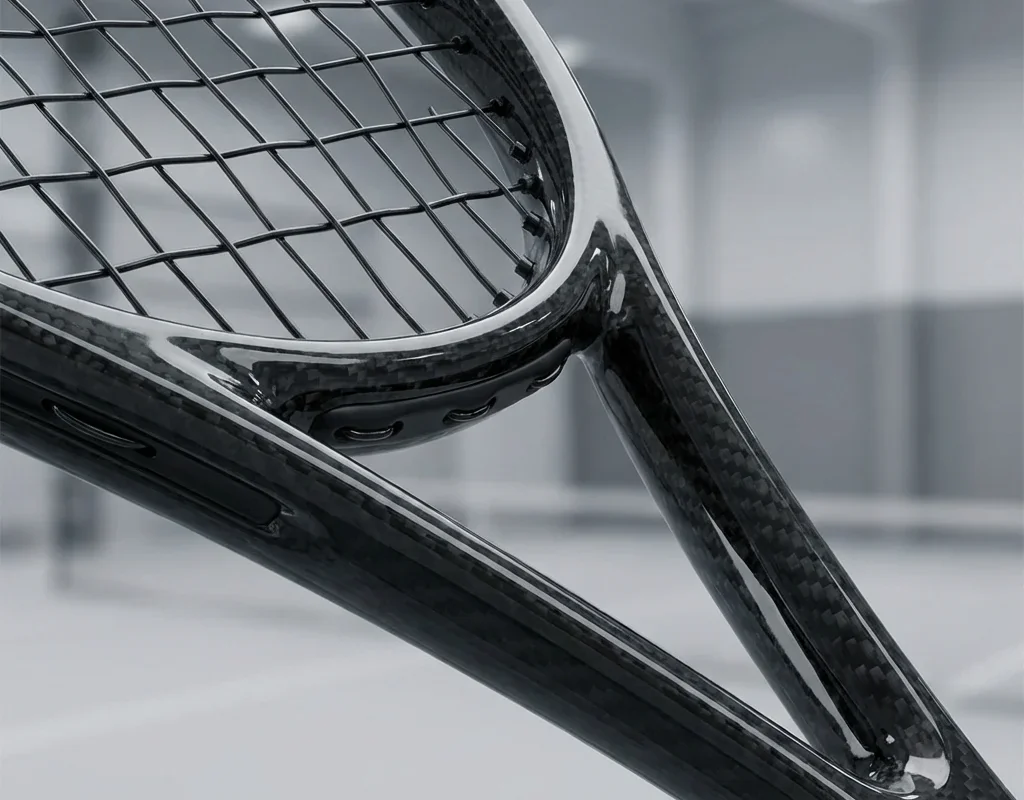
In contrast, professional rackets are made from carbon fiber (graphite) and advanced composite materials (like Graphene, Kevlar, and more). These materials are amazingly light and strong. They allow manufacturers to precisely control the stiffness and flexibility levels of the racket in different areas, giving the player power, control, and vibration dampening at a completely different level.
Technology and Stability
Professional equipment involves extensive research and development. New technologies are designed to improve racket stability during ball impact. When a tennis ball hits the racket at high speed, the racket tends to twist in the hand (torque moment). Professional rackets are designed to resist this twisting, allowing for more accurate shots even when the impact isn't at the racket's center.
Additionally, dampening systems in professional rackets are built into the handle and frame, protecting the player's joints over time. For a player who plays several times a week, this protection is critical for injury prevention.
Is It Worth the Investment?
The answer depends on your playing frequency and goals. If you play once every two weeks for fun, an intermediate racket will do an excellent job. But if you plan to play regularly, take lessons, and improve, investing in professional equipment (or at least quality 'Club Player' equipment) pays off. The equipment will last longer, protect your body, and allow you to reach your full potential.
Summary
The difference between equipment isn't just in price, but in the overall playing experience. We invite you to visit our store, consult with experts, and maybe even take a demo racket for a trial. Only when you feel the difference in your hands will you understand how much the right equipment can upgrade your game.