How to Choose Tennis Shoes - The Complete Guide for Players
Tennis is one of the most dynamic sports there is. The game requires sharp movements, sudden stops, side lunges and short sprint runs. Within all this intense activity, the most important equipment protecting your body is not the racket, but the shoes. At the Israeli Tennis Center we meet players daily who invest a fortune in rackets, but neglect shoe selection – a mistake that can lead to injuries and impaired performance.
Choosing the right tennis shoe is critical for court stability, preventing sprains and protecting the knees and back. Whether you're beginner or professional players, the following guide will help you understand what to look for when entering a tennis equipment store in Israel.
1. Matching to Surface Type
The first and most important parameter in shoe selection is the type of court you play on most of the time. Each surface has different sole requirements:
- Hard Courts: This is the most common surface in Israel. Shoes for hard courts must be very durable, with a strong sole that can withstand the high wear of concrete and asphalt. They provide excellent cushioning to absorb impact.
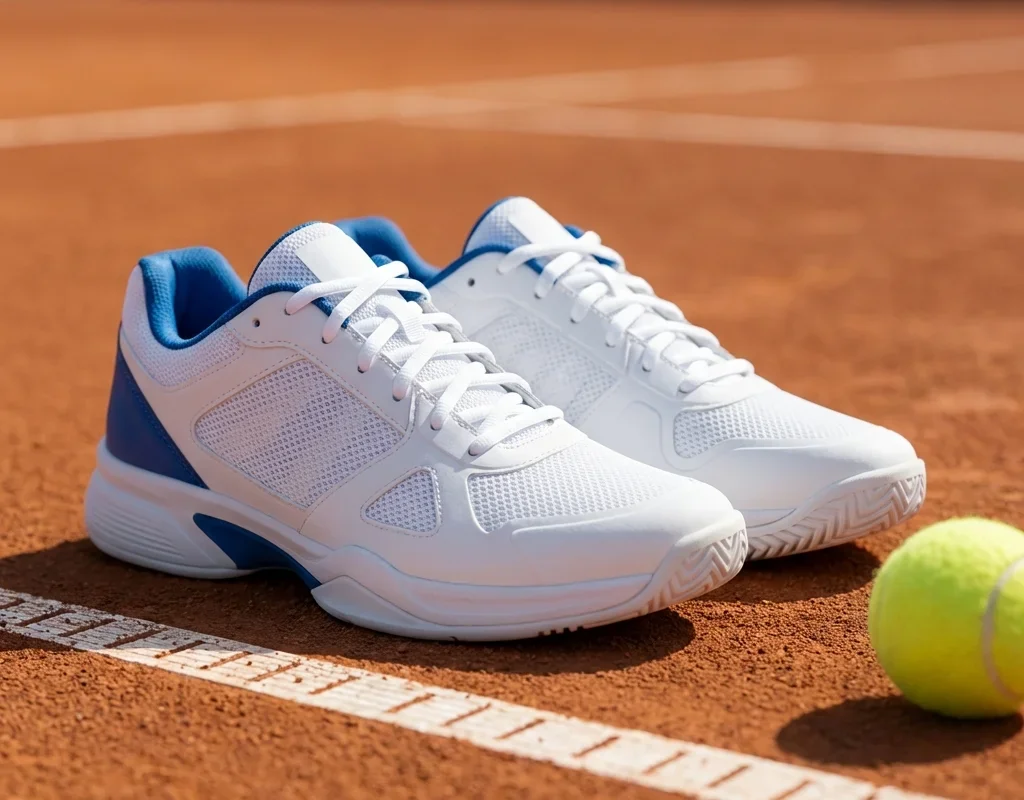
- Clay Courts: The sole of clay court shoes is designed with a "herringbone" pattern (full zigzag) to prevent clay accumulation in the grooves and allow controlled sliding to the ball.
- Grass Courts: Less common in Israel, but requires a sole with small studs for maximum grip on the slippery surface.
2. Stability vs Weight
When you visit the Israeli Tennis Center or any professional store, you'll notice that tennis shoes are usually divided into two main categories: shoes focusing on stability and shoes focusing on speed.
Stability shoes: Will usually be heavier and more massive. They're designed for players who need maximum ankle support, or for physical and strong players who move a lot on the baseline. They provide great security in lateral movements.
Speed shoes: Lightweight, more flexible and ventilated shoes. They suit players who want to feel "close to the court" and move at top speed. The downside is that sometimes they wear out faster and provide less ankle support.
3. Size and Foot Fit
Many make the mistake of buying tennis shoes in the same size as their walking shoes. In tennis, the foot tends to swell slightly during play, and movements include strong braking. Therefore, the rule of thumb (literally) is to leave a gap of about half a centimeter to a centimeter between the big toe and the shoe's end.
If your toes touch the shoe's end when measuring in the store, it will hurt a lot during play. Additionally, it's important to pay attention to shoe width. Different brands manufacture lasts in different widths. Don't compromise on a tight shoe hoping it will stretch – a tennis shoe should be comfortable from the first moment.
When to Replace Shoes?
Professional tennis equipment is designed to last, but every shoe has an expiration date. Clear signs for replacement include sole wear to the point where grooves disappear (causing dangerous slipping), or when you feel the shoe has lost its shock absorption ability and knees start hurting after training.
An average player who plays twice a week will need to replace shoes every 4-6 months. Competitive players replace at much higher frequency.
Summary and Recommendation
Your feet are the most important tool on the court. Don't underestimate shoe selection. We invite you to visit our tennis equipment store in Israel at our complex, consult with the Israeli Tennis Center experts, and try on various models to find the perfect pair that will improve your game and maintain your health.